
Protein Purification


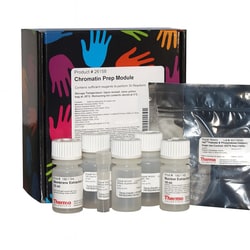
Thermo Scientific™ Pierce™ Chromatin Prep Module
Chromatin immunoprecipitation (chromatin IP, ChIP) assay kit containing all reagents, agarose affinity beads, and a simple, fast, reliable protocol.
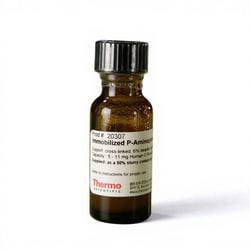
Thermo Scientific™ Pierce™ p-Aminophenyl Phosphoryl Choline Agarose
Bind and purify C-reactive protein (CRP) using these agarose beads of immobilized p-aminophenyl phosphoryl choline (APC).

Thermo Scientific™ AminoLink™ Coupling Resin
Covalently immobilize proteins and antibodies by lysine residues or other primary amines (-NH2) via reductive amination with these aldehyde-activated agarose beads.
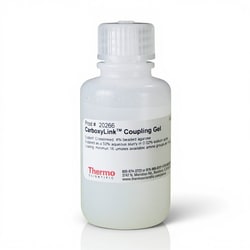
Thermo Scientific™ CarboxyLink™ Coupling Resin
Covalently immobilize peptide antigens and other carboxylate ligands for affinity purification using DADPA-activated agarose beads and EDC crosslinker.

Thermo Scientific™ Surfact-Amps™ Detergent Sampler
Convenient collection of various Surfact-Amps Detergent Solutions and other selected useful detergents for protein research methods.

Thermo Scientific™ Pierce™ Protein G IgG Plus Orientation Kit, 2 mL

Bind and covalently immobilize antibodies to create a reusable affinity purification column with high binding capacity with Protein A or G agarose columns and DSS crosslinker.

Thermo Scientific™ Pierce™ Co-Immunoprecipitation Kit
Covalently immobilize IP antibodies and perform co-IP assays in which target protein complexes are immunoprecipitated without antibody contamination.

Thermo Scientific™ Pierce™ HA-Tag IP/Co-IP Kit
Anti-HA antibody agarose beads and complete reagent set to easily co-immunoprecipitate protein interactions involving HA-tagged fusion proteins.
Thermo Scientific™ Detoxi-Gel™ Endotoxin Removing Columns, 1 mL
Bind and extract endotoxins (lipopolysaccharides or LPS) from antibody or protein samples using bulk resin or columns of immobilized Polymixin B ligand.
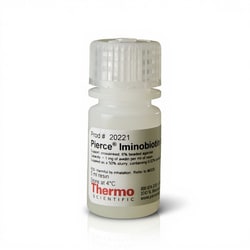
Thermo Scientific™ Pierce™ Iminobiotin Agarose
Agarose beads of immobilized biotin (and iminobiotin) to strongly (or reversibly) bind and remove (or purify) streptavidin or avidin proteins and conjugates from samples.
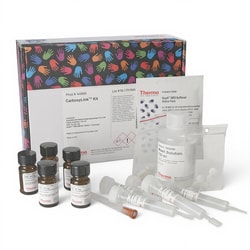
Thermo Scientific™ CarboxyLink™ Immobilization Kit, 2 mL
Covalently immobilize peptide antigens and other carboxylate ligands for affinity purification using DADPA-activated agarose beads and EDC crosslinker.


R&D Systems™ Mouse Erythrocyte Lysing Kit
For the removal of erythrocytes (RBC) from splenocyte preparations
R&D Systems™ Human Erythrocyte Lysing Kit
For the removal of erythrocytes (RBC) from splenocyte preparations.
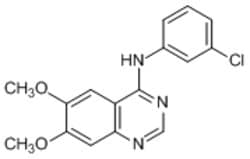
Tyrphostin AG 1478 98.0+%, TCI America™
Tyrphostin AG 1478 98.0+%, TCI America™, available now.